Things About Cars You Only Notice As An Adult

Sarah Oconnell
Published Aug 08, 2026

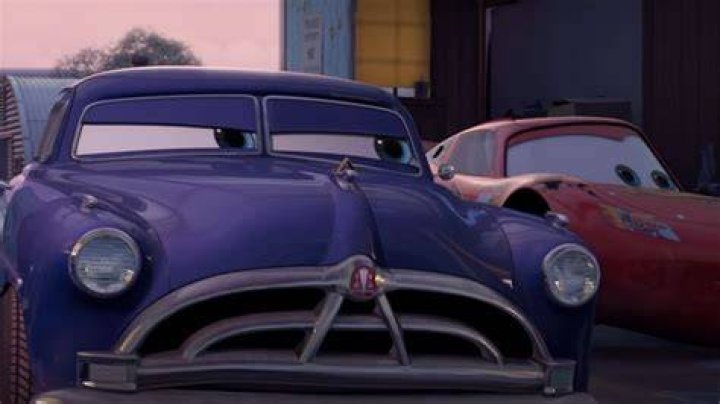
Radiator Springs's old town doctor Doc Hudson is voiced by late Hollywood legend Paul Newman, who also raced professionally.
Older viewers of "Cars" may remember that Newman played a speedy driver on screen in the 1969 movie "Winning," which hit theaters a year after "Bullitt," an action-packed police movie that featured one of the most legendary car chase scenes ever shot. That film starred Steve McQueen, who famously did much of his own stunt work, and had earned a reputation in films like "The Great Escape" as a fearless driver.
McQueen was a hotshot on the asphalt (on-screen and off), not unlike Lightning McQueen, with whom the actor shares a name. So, in the first "Cars" movie, Doc Hudson is initially dismissive and openly hostile toward Lightning — with the animosity alluding to a real-life conflict between McQueen and Newman.
At the peak of their success in the 1960s and 1970s, Paul Newman and Steve McQueen were seen as Hollywood rivals, often competing for the same roles. McQueen was nearly cast in "Butch Cassidy and the Sundance Kid," but turned the role down when he learned Newman would get top billing. McQueen later made a passion project out of the 1971 film "Le Mans," where he played a driver who delivered the famed line: "Racing is life. Everything that happens before or after is just waiting." Paul Newman took things one step further in 1979, when he raced a Porsche 935 in the real Le Mans, finishing first in his class (and second overall) in a rain-soaked race.
Dick Barbour, who co-drove with Newman and coached McQueen, once said that although both actors were good at racing, the source of their skills couldn't be more different. "Paul was a very methodical driver. He wasn't a natural like Steve," Barbour said. "McQueen picked it up immediately."
In 1974, the duo were paired together onscreen for the first and only time, in the blockbuster film "The Towering Inferno." Ever the competitors, when McQueen got his script for the Irwin Allen disaster flick, he counted out his lines to see if he had more than Newman.