How to see more info on your galaxy s6 s7 or note 5’s screen with display scaling

Sarah Oconnell
Published Nov 06, 2026
Cameron Summerson is ex-Editor-in-Chief of Review Geek and served as an Editorial Advisor for How-To Geek and LifeSavvy. He covered technology for a decade and wrote over 4,000 articles and hundreds of product reviews in that time. He’s been published in print magazines and quoted as a smartphone expert in the New York Times. Read more.
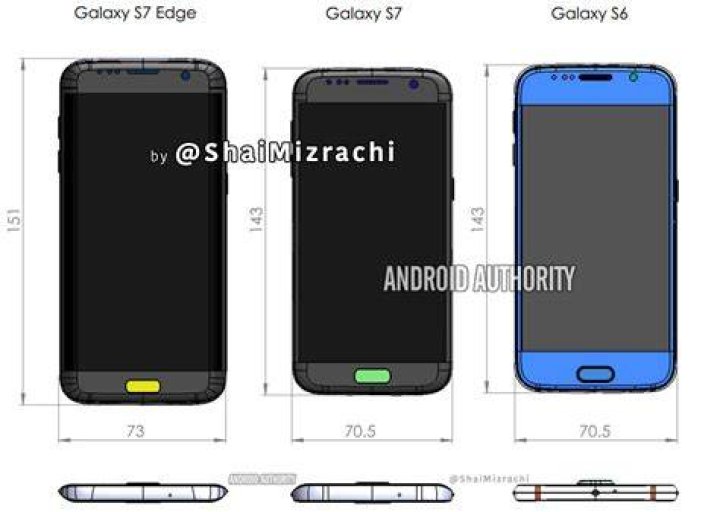
If there’s one argument I’ve seen made for capacitive buttons on Android (as opposed to on-screen navigation), it’s that you get more information displayed on the screen—that means more time reading and less time scrolling. If you have a Samsung Galaxy device, then you’re already on the capacitive buttons train, but there’s also a way to get more info on the screen if you want. It’s called “Display Scaling,” and you can get it on the S7, S6, and Note 5.
Display Scaling is a default option on the S7/Edge. There’s also a workaround to access it on the S6 and Note 5, which we’ll cover down below. Before we get started, it’s worth noting that this makes everything on the screen smaller, and thus harder to read. If you’re okay with that, let’s roll with it.
How to Access Display Scaling on the Galaxy S7
If you have an S7 or S7 Edge, this is easy. Samsung enabled this option by default, so getting to it is pretty straightforward.
The first thing you’ll need to do is jump into the Settings menu by pulling down the notification shade and tapping the cog icon.
Once in there, scroll down to the “Display” option and tap that.
Down the screen just a bit is an option for “Display scaling.” That’s the one you want.
When you open this menu, you’ll have two options: “Standard“ and “Condensed.” The former is default, and when you tap the “Condensed” option, the preview area below will give you an example of what to expect from the change. And really, if you find that you don’t like it, you can always change it back later.
Once you’ve confirmed that you’re into the change, just hit “Done.” A popup will let you know that you need to restart your device, so just go ahead and hit “Restart” to apply the change.
Boom, you’re done. Easy peasy, right?
How to Access Display Scaling on the Galaxy S6, S6 Edge+, and Note 5
The exact same menu is available on older Galaxy devices, but for some reason Samsung decided to hide this option. That means getting to it is a little more convoluted, but fortunately it’s not that difficult.
The first thing you’ll need to do is install Nova Launcher, because it offers advanced widget and shortcut access not available on stock launchers. But really, it’s an excellent launcher on its own, so you really should give it a go either way.
Once it’s installed, just hit the Home button and select Nova.
From there, long-press anywhere on the home screen and select “Widgets.” The first row of options are Nova shortcuts—you’re looking for “Activities,” which should be the third one in the list. Long-press and drag it to the home screen.
The Activities menu will take a few seconds to populate, as there are a lot of options here. Once it’s loaded, though, scroll down to “Settings” and tap the drop-down arrow.
In this list, you’re looking for “.DisplayScalingActivity.” Once you’ve found it, just give it a tap. This will generate a new shortcut on the home screen.
Tapping that shortcut will open the same menu shown above on the Galaxy S7, and all instructions from there are the exact same.
Pick your setting, apply, reboot, and you’re finished.
Seeing more info on the screen is nice, but if at any point you decide that a condensed format just isn’t right for you, going back is easy—just repeat the above steps and select “Standard.” Nothing to it.
You know how amongst all the cool new Android N features there’s also native DPI scaling (the ability to resize on-screen content)? It turns out the Galaxy S7 and Galaxy S7 Edge have it too. Well, kind of. With a very simple process – no root or special skills required, I promise – you can squeeze more content onto your Galaxy S7’s screen. (Update: we’ve since been told the same method works for the Galaxy S6 and Note 5 as well.)
Whereas the Android N preview has a sliding scale between one and five (as you can see below on the left), the Galaxy S7 has just two: a Standard setting of 640 DPI (how it comes out of the box) and a Condensed view at 540 DPI or thereabouts. If you prefer to have more content on your screen rather than have it big and visible, then you might want to follow the steps below.
How to increase Galaxy S7 DPI scaling
All you have to do to enable Galaxy S7 DPI scaling is to install Nova Launcher (you’ll only need it for a moment, you can go back to TouchWiz once the process is complete).
1. Launch Nova Launcher, long-press the home screen, tap Widgets and drag Activities (in the Nova Launcher widgets) to your home screen.
2. This will bring up a menu. Scroll down to Settings, expand the list and tap .DisplayScalingActivity which will place an icon on your home screen.
3. Tap the icon and you’ll see the DPI scaling menu in typical Samsung form. Selecting between Standard and Condensed will show a preview in the app list below and as soon as you tap Done you’ll be prompted to reboot, after which the setting will have taken root.
4. You’ll have to reboot your phone, but the change will persist through further reboots or even Android updates.
As you can see in the screenshots below, you’ll be able to see a lot more information in your Twitter feed, social stream or RSS feed. You can see that app icons don’t change size, but other on-screen elements do, so in the app drawer the status bar icons and Search/A-Z/Edit text is smaller in the Condensed setting. On the home screen, not much has changed other than the size of the Google search bar and the status bar icon size. The Settings menu also becomes a lot more compact.
As noted on XDA Developers (where this neat little trick was discovered), this is the third thing from the Android N preview that already existed in Samsung devices: multi-window, quick setting toggles at the top of the notification shade and now, DPI scaling. Credit where credit is due, so thank you Samsung, and thanks to XDA for discovering this hidden gem.
Если есть один аргумент, который я видел для емкостных кнопок на Android (в отличие от экранной навигации), так это то, что вы получаете больше информации, отображаемой на экране-это означает больше времени для чтения и меньше времени прокрутки. Если у вас есть устройство Samsung Galaxy, то вы уже на емкостной основе кнопок, но есть также способ получить больше информации на экране, если вы хотите. Он называется «Масштабирование дисплея», и вы можете получить его на S7, S6 и Note 5.
Отображение масштабирования является опцией по умолчанию на S7/Edge. Также есть обходной путь для доступа к нему на S6 и Note 5, который мы расскажем ниже. Прежде чем мы начнем, стоит отметить, что это делает все на экране меньше и, следовательно, труднее читать. Если вас это устраивает, давайте покатимся с этим.
Как получить доступ к масштабу дисплея на Galaxy S7
Если у вас есть S7 или S7 Edge, это легко. Samsung включил эту опцию по умолчанию, поэтому добраться до нее довольно просто.
Первое, что вам нужно сделать, это перейти в меню «Настройки», опустив шень уведомлений и нажав на значок винтика.
Оказавшись там, прокрутите вниз до опции «Дисплей» и коснитесь этого.
Вниз по экрану немного есть опция для «масштабирования дисплея». Это тот, который вы хотите.
Когда вы откроете это меню, у вас будет два варианта: «Стандартный» и «Конденсированный». Первый используется по умолчанию, и когда вы нажимаете опцию «Конденсированный», область предварительного просмотра ниже даст вам пример того, чего ожидать от изменения. И действительно, если вы обнаружите, что вам это не нравится, вы всегда можете изменить это позже.
После того, как вы подтвердили, что вы в изменение, просто ударил «Done». всплывающее окно даст вам знать, что вам нужно перезапустить устройство, так что просто идти вперед и ударил «Перезапустить», чтобы применить изменение.
Бум, ты закончил. Легкий, не так ли?
Как получить доступ к масштабу дисплея на Galaxy S6, S6 Edge и Note 5
TheТочныйТакое же меню доступно на старых устройствах Galaxy, но Samsung почему-то решила скрыть эту опцию. Это означает, что добраться до него-этоМаленькийБолее запутанный, но, к счастью, это не так уж и сложно.
Первое, что вам нужно сделать, это установитьNova Launcher, Потому что он предлагает расширенный виджет и ярлык доступа, недоступный на фондовых пусковых установках. Но на самом деле это отличная пусковая установка сама по себе, так что вам действительно стоитВ любом случае.
Как только он установлен, просто нажмите кнопку Home и выберите Nova.
Оттуда долго-нажмите в любом месте на главном экране и выберите «Виджеты». Первая строка опций-ярлыки Nova-вы ищете «Действия», которые должны быть третьими в списке. Длительное нажатие и перетащите его на домашний экран.
На заполнение меню Activities потребуется несколько секунд, так как здесь есть много вариантов. Однако после загрузки прокрутите вниз до «Настройки» и коснитесь стрелки раскрывающегося списка.
В этом списке вы ищете «. DisplayScalingActivity». Как только вы его нашли, просто нажмите. Это будет генерировать новый ярлык на главном экране.
При нажатии на этот ярлык откроется то же меню, что и на Galaxy S7, и все инструкции оттуда будут одинаковыми.
Выберите настройки, примените, перезагрузитесь, и вы закончите.
Видеть больше информации на экране приятно, но если в какой-то момент вы решите, что сокращенный формат просто не подходит для вас, вернуться назад легко-просто повторите вышеуказанные шаги и выберите «Стандарт». Ничего.
What You Need
Android Studio and Android SDK
At least one platform installed in Android SDK > Platform
Downloaded Galaxy Emulator Skin
How To Use
Download your preferred Galaxy Emulator Skin.
Extract the downloaded skin and copy it in Android Studio > plugins > android > lib > device-art-resources.
Alternatively, you may store the downloaded file anywhere in your file directory. Just locate it later on when configuring the hardware profile.
Launch Android Studio and open AVD Manager by going to Tools > AVD Manager.
If you have an existing virtual device, click Edit button and simply select the downloaded Emulator Skin. Otherwise, click Create Virtual Device in AVD Manager.
In Virtual Device Configuration, click New Hardware Profile to create a profile for your new virtual device.
Fill in the specification of your virtual device.
Screen size and Resolution should match the Emulator Skin to be used.
In the Default Skin, select the downloaded Emulator Skin.
Or locate it by clicking the . button beside the Default Skin dropdown menu. Click OK then Finish.
The Hardware Profile for your virtual device has been created. Proceed by selecting its System Image.
Make sure that you have at least one system image downloaded before you can proceed.
Verify all configuration and check if the Emulator Skin is applied by clicking Show Advanced Settings.
Launch the newly created virtual device in the AVD Manager.
Afterwards, your virtual device with its Galaxy Emulator Skin will appear.
Tips on Using Emulators
By clicking the . (More) in the toolbar beside the emulator, you will see the Extended Controls window. Click Help to see the list of Keyboard shortcuts.
The buttons and other controls on the emulator work as they would on the actual device. For example, clicking on the home button will bring up the home screen.
Tweak the AVD hardware configuration to speed up your emulator. Increasing the memory or setting the screen to a smaller size gives a minor performance increase.
When starting an AVD, you may select a screen size suitable to your computer to enlarge or reduce the size of the emulator.
Emulator Limitations
The Galaxy Emulator Skin defines only the appearance and controls of an Android Virtual Device (AVD), which still runs on a stock Android OS. It does not include any One UI feature, since it only serves as skins for an AVD.
The emulator lacks support for the following features:
Placing or receiving actual phone calls. However, you can simulate phone calls (placed and received) through the emulator console.
Back camera/video capture. Front camera works if you have a webcam installed on your computer.
ALL VERSIONS
G930F
G930FD
G930W8
Versions: G930F (Global); G930FD (Global; Southeast Asia); G930W8 (Canada)
Also known as Samsung Galaxy S7 Duos with dual-SIM card slots
| Network | Technology | GSM / HSPA / LTE |
|---|---|---|
| 2G bands | GSM 850 / 900 / 1800 / 1900 – SIM 1 & SIM 2 – G930FD | |
| 3G bands | HSDPA 850 / 900 / 1700(AWS) / 1900 / 2100 – G930F, G930FD, G930W8 | |
| 4G bands | 1, 2, 3, 4, 5, 7, 8, 12, 13, 17, 18, 19, 20, 25, 26, 28, 38, 39, 40, 41 – G930F, G930FD | |
| 1, 2, 3, 4, 5, 7, 8, 12, 13, 17, 18, 19, 20, 25, 29, 30, 38, 39, 40, 41 – G930W8 | ||
| Speed | HSPA 42.2/5.76 Mbps, LTE-A (3CA) Cat9 450/50 Mbps |
| Launch | Announced | 2016, February 21. Released 2016, March 11 |
|---|---|---|
| Status | Discontinued |
| Body | Dimensions | 142.4 x 69.6 x 7.9 mm (5.61 x 2.74 x 0.31 in) |
|---|---|---|
| Weight | 152 g (5.36 oz) | |
| Build | Glass front (Gorilla Glass 4), glass back (Gorilla Glass 4), aluminum frame | |
| SIM | Single SIM (Nano-SIM) – G930F Hybrid Dual SIM (Nano-SIM, dual stand-by) – G930FD | |
| IP68 dust/water resistant (up to 1.5m for 30 mins) |
| Display | Type | Super AMOLED | ||||||||||||||||||||||||||||||||||||||||||||||||||||||||||||||||||||||||||||||||||||||||||||||||||||||||||||||||||||||||||||||||||||||||||||||||||||||||||||||||||||||||||||||||||||||||||||
|---|---|---|---|---|---|---|---|---|---|---|---|---|---|---|---|---|---|---|---|---|---|---|---|---|---|---|---|---|---|---|---|---|---|---|---|---|---|---|---|---|---|---|---|---|---|---|---|---|---|---|---|---|---|---|---|---|---|---|---|---|---|---|---|---|---|---|---|---|---|---|---|---|---|---|---|---|---|---|---|---|---|---|---|---|---|---|---|---|---|---|---|---|---|---|---|---|---|---|---|---|---|---|---|---|---|---|---|---|---|---|---|---|---|---|---|---|---|---|---|---|---|---|---|---|---|---|---|---|---|---|---|---|---|---|---|---|---|---|---|---|---|---|---|---|---|---|---|---|---|---|---|---|---|---|---|---|---|---|---|---|---|---|---|---|---|---|---|---|---|---|---|---|---|---|---|---|---|---|---|---|---|---|---|---|---|---|---|---|---|---|
| Size | 5.1 inches, 71.5 cm 2 ( Disclaimer. We can not guarantee that the information on this page is 100% correct. Read more
Samsung Galaxy S7 – user opinions and reviews
Same here my samsung s7 has the same exact problem like urs. even after it is fully charged, it will go down by itself. at the end of the day it wouldve dropped from 100% to 60% when i’m not even using it.
FYI – The S7 has the FM chip installed. If you download the “Next Radio” app from the Play Store the chip will automatically be unlocked. All you have to do is plug-in a pair of headphones for an antenna and you have free FM radio access.
Perfect size works fine after 4 years. But the battery is almost done. Can’t leave home without being fully charged because I will be stranded in an hour. Now always with a power bank. If in use discharges faster than the fast wireless can charg.
ALL VERSIONSG900FG900IG900MG900AG900TVersions: G900F (Europe), G900I (Asia, Australia), G900M (Vodafone), G900A (AT&T), G900T (T-Mobile), G900W8 (Canada), G900K/G900L/G900S (Korea)
| |||||||||||||||||||||||||||||||||||||||||||||||||||||||||||||||||||||||||||||||||||||||||||||||||||||||||||||||||||||||||||||||||||||||||||||||||||||||||||||||||||||||||||||||||||||||||||||